Liquid Leadership Blog Home About Brad Szollose Goodies for Event Planners Videos Testimonials
Showing posts with label #Millennials. Show all posts

Monday, December 19, 2016

Keys to Advising
The Millennial Owned Start-Up

Click Here for Previous Post...

Photo Credit: Bigstock #86408645 Millennial Teenage Girls through agreement with Smith Durant

Telling a Millennial that they need to stick to a five to ten year business model will be met with complete skepticism. Here’s why:


The reason the business development cycle is three months out instead of five years is due to several influences: digital devices, email and big data have given us the power to get more work done in less time with more accuracy.

Technology has also given us the ability to work from anywhere we want regardless of location even on a modest budget. Skype for instance gives a small business access to international videoconferencing for pennies. This allows smaller startups to compete for the same low hanging fruit that well-established behemoths used to ignore.

As Olympian Vince Poscente puts it, like it or not, “
we are in the age of speed.”

And with that said, any coach, regardless of generation who is still clinging to the 20th Century models will not survive the milieu of coaches about to join your ranks.

And besides, Millennial business owners want to move fast.

But here is where Millennial coaches and business advisers will have the hardest time; cracking the generational mindset of older established business professionals. Let me explain, if we go back in time, to the 70s no one was seeking the advice of a 25 year old. Age determined rank in the boomer world, and that ideology of age+experience=trust is present to this day.

Inside EVERY Baby Boomer’s head is something I have labeled the Career Path Paradigm. At 20 a person was to start in the mail room. Know your place in the organization. Sit down. Shut up and listen. Hard work and sweat would get you noticed. No one is interested in what a 20-something has to say. At 30, you might get noticed and move up in rank. Stability starts at 30. You were supposed to get married and buy a house and start a family. By 40 you get a middle management position and 50 gets you the corner office and a title and keys to the executive washroom.

Although this model is over, Millennial Coaches will have to overcome this very real belief still sitting in the nooks and crannies of anyone over 50.

If you are a Millennial Coach selling to a Boomer, I suggest you enter with a diverse team made up of Gen X and Boomers. Even if it is just your advisory team, do it f you want to make the boomer comfortable.

___________________________________________________________________


Learn more about this topic:

Watch an exclusive webinar
from Brad Szollose & Nathan Smith on Are Millennials Destroying Business As We Know It?

___________________________________________________________________


What about coaching the Millennial-owned startup?

Two close business associates invited me to a breakfast meeting. The topic? Could I groom a Millennial business owner? Although the young man was a genius at 28—his entire business centered around a multi-million dollar app he had developed. His entire business was a digital product. As they filled me in, I realized the young wunderkind was intelligent, but sloppy, said inappropriate things and was inexperienced at business structure.

My job is to groom this young man for the C-Suite. I have one year to get him ready.

Since I have a deep understanding of Millennials, my job will be simple. For the rest of you, here are a few tips;

1) Millennials are friends with their parents.
Use that to your advantage.

What that means is as children they were privy to conversations that previous generations never had with their parents. This included getting career advice and mentorship lessons since they were 5. In other words, Millennials weren’t raised by parents, they were raised by advisers. The hierarchy in the household was flattened in favor of collaboration.

To work with this generation, become a partner in their success. Sounds exhausting but a Millennial will need far more "hands on" than other clients. Why you may ask? Well, although they had deep relationships with their parents and teachers growing up, they may not have the same business polish that was expected of Gen X and Boomers at the same age.

Huge chunks of knowledge is missing from their experience. And you as a consultant, a coach, (or mentor), will need to explain why things need to get done in a certain way in a particular order.

2) Harness their innovation before they get cynical.

Because Millennials are not trained in traditional business methodologies they break the rules. BUT, they don’t know they are breaking the rules. This is a good thing because like any breakthrough entrepreneur, innovation is what wins the day.

But show them that creating cool products can also go hand-in-hand with traditional business structures. A Results Only Work Environment is best for creating an environment that Millennials respect, but at the same time, celebrate the importance of deadlines and systems. In a ROWE environment output is 32% higher than traditional business hierarchies.

Celebrate Innovation and counter intuitive solutions. THAT is what Millennials do best.
The new Holacracy trend is great and all, but unless you have money to burn through before that first product takes root, I suggest sticking to a ROWE model.

3) Build Fast and Sell…BUT, Prepare them for the Long Haul as well.

While you show the Digital Native that you aren’t their grandfather’s business coach, build a rapport that is based on results. Building a start-up into a viable company for acquisition is every entrepreneur’s dream. And it is a hot trend. BUT, teaching valuable business lessons that create a lasting legacy is far more important for the future of your business as well as theirs.

You see, we all work in the One Off environment. But how would you like to be rehired years later when that young entrepreneur is a leader at another company? Or creating a deep dive array of coaching services that grow as the organization grows? For myself I’ve had to add 9 month and one year programs to my consulting simply because I realized one workshop, a keynote or a 6 week engagement weren’t really enough to create a sea change. For a broad transformation that is felt throughout the organization, I needed a team, and my team needs to get inside the organization for 9 months minimum.

Long term, versus short term.
Which do you think is better?


Also, don’t wear a tie. Millennials like to be comfortable at work, and so should you. I wear a Hugo Boss suit with a fitted dress shirt and a silk handkerchief with expensive sunglasses. Even Millennials in flip-flops appreciate casual elegance.

So get in there. There’s money to be made, and companies to help build.



Brad Szollose

Global Business Adviser and Consultant
on Millennials and Workforce Performance Strategies

This Blog Post originally appeared on the Smith Durant Blog: 

Thank you. If you wish to know more about Smith Durant, Nathan Smith, Michael Durant, Lee Constantine and the work we are doing together...click on their logo below:


___________________________________________________________________

Learn more about this topic:
Watch an exclusive webinar
from Brad Szollose & Nathan Smith on Are Millennials Destroying Business As We Know It?

Leadership IS a Generational Issue these days. Why you may ask? Well, what motivates Millennials will NOT motivate a Boomer. Setting up an environment where all generations can thrive is what I do...


Brad Szollose
Global Management Consultant
Cross Generational Leadership Development & Workforce Performance Strategies
Executive Coach

Brad Szollose (pronounced zolis), is a globally recognized Management Consultant and the foremost authority on Millennials and Cross-Generational Leadership Development Strategies.


 Brad Szollose Preparing The Next Generation of C-Level LeadersTEDX Speaker, Web pioneer and the author of the award-winning, bestseller Liquid Leadership: From Woodstock to Wikipedia, Brad is a former C-level executive of a publicly traded company that he cofounded that went from entrepreneurial start-up to IPO in three years; the first Dot Com Agency to go public on NASDAQ. His company K2 Design, experienced 425% hyper-growth, due in part to a unique management style that won his company the Arthur Andersen NY Enterprise Award for Best Practices in Fostering Innovation.
 
Today the world’s leading business publications seek out Brad’s insights on Millennials, and he has been featured in Forbes, The Huffington Post, New York Magazine, Inc., Advertising Age, The International Business Times, and The Hindu BusinessLine to name a few, along with television, radio and podcast appearances on CBS and other media outlets. 
 

Brad's programs have transformed a new generation of business leaders, helping them maximize their corporate culture, expectations, productivity, and sales growth in The Information Age. 

Pick Up Brad's new book...

Journeys to Success: The Millennial Edition. 

#1 Bestseller on Amazon in Hot New Releases!!!

Journeys to Success: The Millennial Edition.

Wednesday, June 15, 2016

The Disruptive Power of Today's Entrepreneur

Previous Articles

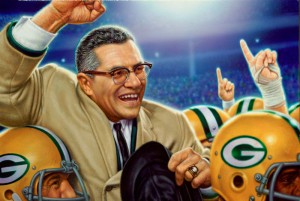
More about Vince Lombardi
While speaking to a large corporate audience in what would prove to be his last keynote address, the legendary football coach Vince Lombardi gave his audience a major piece of wisdom. "I'm going to share with you the key to success in any business,"he said, and then paused.

The room fell into a deep silence as the audience leaned forward. The pause continued a while longer, building the excitement.

"The secret, in a word, is 'heartpower,'" Lombardi continued. "Capture the heart, and you've captured the person. Get people to fall in love with your company."


Look around you at the companies that you love to follow and the leaders who run them: Meg Whitman, former CEO of eBay, the late Steve Jobs of Apple, and Reed Hastings of Netflix and the late Anita Roddick of The Body Shop.

These leaders, among so many, stand out-and so do their companies—because their passion for excellence is contagious. But a greater observation is necessary. They didn't just get there because they showed up and started talking. They built a solid company based on a passionate decision to upset the status quo, because they didn't like the status quo. Using the products they created to change the way we do things took perseverance, stubbornness, and passion, through the good times and the bad.

Great leaders do just that. They create a contagious, passionate vision with everything they touch. Many of the leaders I mentioned above can get angry, excited, and fired up because they care about their people and the products they send out into the world-and almost all of them never graduated from or even attended business school.

Simply put, they integrate the people who work for them as like-minded human beings with all the same passions and drive as anyone else, an integral part of the company's goals. These leaders never treat their employees like subordinates.


These leaders have made a lifetime commitment to becoming better by keeping their eye on the trends and raising their standards, and it shows in every inch of their organizations. They capture the heart and the imagination.

The biggest danger for a company nowadays is when they stagnate, refusing to evolve.
I believe this comes from a myth, the belief that one big idea is enough to live on happily ever after. In today's environment, consistently great ideas must be cranked out and brought to the forefront as quickly as possible. In order to leave a legacy, leaders must act and think like entrepreneurs.

Medium and large companies that run like entrepreneurial start-ups often create relatively small team-to-team and peer-to-peer environments. Hierarchies appear fuzzy to an outsider because these environments are flexible, creative, and free of rules and regulations. Even the CEO is available to every member of the staff. Plain and simple, these medium and large companies operate like small companies.

Internal Darwinism
In entrepreneurially run organizations, each team member is an active participant in the company's success. Participants become contributors in this type of paradigm, solving problems themselves, free to make decisions that in larger organizations might take weeks for approval from higher-ups.

These organizations operate on cyclical time, not linear time. Each member takes responsibility for when and how the work gets done. People begin to rely more on inspirational moments than on a clock.

People in these types of organizations are contagious to be around, as they begin to eat, sleep, and drink what they are working on. This is when team members begin to develop an almost cult-like following, becoming evangelists for the brand and working at midnight just as easily as they might work at 10:00 am.

This is the power of running your organization like an entrepreneurial start-up. People become fully engaged in these environments, refusing to leave. 


In many of these organizations, the bulk of employees have been with the company since its inception. No matter how big your company may get, keep everyone in the organization in touch with the passion of the company's vision.

Every great leader I have coached maintains these uncompromising qualities. Their leadership styles are uniquely based on their personality and the values they truly believe in. They are contagious to be around and have a vision so clear and intoxicating, they are capable of drawing in a new hire, making each and every one feel as if they are part of a contributing force. These qualities also calm new hires, especially when someone has to work with a famous leader.

Inside these entrepreneurially run companies, it boils down to one thing and one thing only: trust. Ensuring that every manager, executive, and team leader is heads and shoulders above the rest requires time and effort. You must raise internal standards but give up control. By raising your people's standards and professionalism, you can step back and trust that the work is getting done to exacting standards.

Start destroying the bottlenecks of communication and approval. Trust is the key to a lasting legacy.

Technology will entice more and more people around the world to become entrepreneurs, and entrepreneurs always create disruption as they destroy entrenched business models in favor of a more efficient and more profitable business model. It is business Darwinism.

As John Doerr of Kleiner Perkins venture capital firm-who invested in Netscape, Amazon, Google, and Bloom Energy when they were just starting-stated on 60 Minutes with Lesley Stall, "That's my job, to find entrepreneurs who are going to change the world-and then help them."

So, I ask you now as a leader, here in the death throes of Industrial Age thinking, what kind of company are you going to invent? Where do you want to go? What possibilities are out there awaiting you?

The ideas are endless.

Thanks for reading,


Original article source: http://EzineArticles.com/7388189

Brad Szollose
Global Management Consultant

Millennial Expert, Cross Generational Leadership Development & Workforce Performance Strategies, Executive Coach


Brad Szollose (pronounced zolis), is a globally recognized Management Consultant and the foremost authority on Millennials and Cross-Generational Leadership Development Strategies.


TEDX Speaker, Web pioneer and the author of the award-winning, bestseller Liquid Leadership: From Woodstock to Wikipedia, Brad is a former C-level executive of a publicly traded company that he cofounded that went from entrepreneurial start-up to IPO in three years; the first Dot Com Agency to go public on NASDAQ. His company K2 Design, experienced 425% hyper-growth, due in part to a unique management style that won his company the Arthur Andersen NY Enterprise Award for Best Practices in Fostering Innovation.
 
Today the world’s leading business publications seek out Brad’s insights on Millennials, and he has been featured in Forbes, The Huffington Post, New York Magazine, Inc., Advertising Age, The International Business Times, and The Hindu BusinessLine to name a few, along with television, radio and podcast appearances on CBS and other media outlets. 
 

Brad's programs have transformed a new generation of business leaders, helping them maximize their corporate culture, expectations, productivity, and sales growth in The Information Age. 

Pick Up Brad's new book...

Journeys to Success: The Millennial Edition. 

#1 Bestseller on Amazon in Hot New Releases!!!

 21 ASTOUNDING Millennials tell their personal stories of failure and success...

Journeys to Success: The Millennial Edition.


Friday, February 12, 2016

Want to Understand Millennials?

Try These 7 Books, Movies & TV Shows.

http://liquidleadership.blogspot.com/2015/12/whats-your-strategy-in-2016.html


In an attempt to help companies, academia, government and parents fully understand the next generation, I try to find things that help awaken the awareness of just how differently Millennials and Generation Z were raised. Whether it's Millennials, Gamers, Digital Natives, Gen Y, Cloud Kids or whatever you may call them, anyone born AFTER 1977, is a child of the future.

Besides toys that interacted and talked back to them (think Teddy Ruxpin and Speak & Spell), the psyche of Digital Natives has been forged by TV, Movies and Video Games...all tied to toys, books and action figures. So, buckle up...

Here's my awesome list of Movies & TV Shows that had a direct impact on Millennial Thinking:

1) Hey Arnold!

Animated TV Series


Hey Arnold! was an animated television series that aired on Nickelodeon from 1996-2004. The story centers around the main character Arnold, a 4th-grader living in the inner city (resembling Brooklyn, NY).

Arnold lives with his grandparents in a multi-racial boarding house. Along with a cast of friends— Helga, Gerald, Harold, Stinky, etc...Arnold is surrounded by motley assortment of neighbors and friends living at the lower end of socioeconomic scale. In other words, more of a real slice of American life.

Having aired over 100 episodes and a major motion picture in 2002, Hey Arnold! has been cited for it's depth and emotional storytelling.

This was a favorite in our household. Television shows like this exposed Millennials to a world of true racial diversity and acceptance. I highly recommend it. 

2) Harry Potter

by J.K. Rowling

If there was one thing that gave Millennials the idea that they had some sort of secret powers waiting to be awakened, it was this gem by J.K. Rowling.

Ironically, no one believed in the book at first. It was believed at the time within the publishing industry that 10 year old boys did not read big books or children's books written by women, or that boys would not read a book about a boy wizard. So the original cover showed only a boy standing by a train.

When *Harry Potter and The Philosopher's Stone was released, it became the start of a billion dollar franchise. *(It was released in the United States as Harry Potter and The Sorcerer's Stone).

The story centers around Harry, a young impish boy who is raised by his Aunt & Uncle Dursley who spare not a single moment chastising Harry, treating him like a servant instead of their nephew, while loading lavish praises on their spoiled bully of a son Dudley.

The plot sits squarely on the mystery of Harry's parents James and Lily Potter, and their death at the hands of the evil wizard Lord Voldemort. Harry somehow survives but retains a lightening bolt shaped scar on the right side of his forehead.    

As Harry reaches 11 years of age, his life changes dramatically when giant Hagrid bursts through the door delivering a birthday cake, and a letter explaining that Harry is a wizard and has now been accepted to the Hogwarts School of Witchcraft & Wizardry.

Along the the journey, Harry meets his trusted companions Ron Weasley and Hermione Granger, who remain his trusted companions throughout the book series and movies.

WHY is this on my list? Think about the plot; A little boy, being verbally abused by his family, lives with a secret power. He believes that somehow, someday, he will be vindicated. Suddenly all his suspicions are confirmed; He is part of a secret group of masters who teach him how to wield high technology (magic) in order to beat evil adults.  

If there was one thing that helped Millennials believe in themselves, Harry Potter is it.


3) Pokémon

Japanese Animated TV Series and Card Game

If Harry Potter was a dominating force to be found on Millennial bookshelves, then a close second was Pokémon.

Whether Yu-Gi-Oh or Pokémon, these franchises had a profound effect on Millennial Playtime.


It appears that Yu-Gi-Oh was for kids, while Pokémon was a bit more appealing to all age groups...and clearly, the leader of the two franchises. So I'll focus on Pokémon.

The franchise began as a pair of video games for the original Game Boy, and developed multi platform video games, trading card games, animated television shows and movies, comic books, and toys. According to Wikipedia, "Pokémon is the second-most successful and lucrative video game-based media franchise in the world, behind only Nintendo's Mario franchise."

In a fusion of martial arts & the science of bug collecting, Pokémon takes place in a fictional universe were Pokémon Trainers (humans) attempt to collect and capture as many Pokémon creatures as possible. Each creature has special powers and falls within categories that are to be used by the Trainer during gladiator styled battles within a Pokémon Arena.


Along with life lessons, Pokémon taught children strategy, tactics and the importance of friendship. And one more thing: don't judge someone based on stature.


4) Ender's Game  

by Orson Scott Card


http://www.imdb.com/title/tt1731141/
If you want to understand the world of video gaming AND the mindset of success that Millennials have had thrust upon them during childhood, then I suggest you read the 1985 book first, then watch the 2013 film of the same name.

Not quite as popular as Harry Potter, Ender's Game was required reading in many American high schools.

Set in Earth's future, the novel and major motion picture presents an imperiled mankind after two conflicts with the "buggers"—an insect-like alien species. Earth's defensive forces are training and building more advanced star ships in anticipation of a third invasion. 

In order to develop commanders capable of defeating the much larger alien forces, the International Fleet creates a crash training program for children. The theme throughout Ender's Game is that children have an advantage over their older commanders at Battle School; having faster reflexes when it comes to gaming interfaces and out-of-the-box thinking. 

In other words: being older is a hindrance.


Protagonist Andrew "Ender" Wiggin is a trainee who excels at gaming simulations and military tactics. Despite his lilliputian stature, Ender isn't half bad in a fight either, utilizing strategy and Aikido as his secret weapon. Fighting skills he developed from an abusive brother.

Although it is a science fiction novel, Ender's Game is suggested reading for many military organizations including the U.S. Marine Corps as a prime example of out-of-the-box tactics and strategy. 


Ender's Game WILL help you understand the blurry lines of right and wrong that Digital Natives see around them all the time.


5) Barney & Friends

Live Action Television Series

Barney is a purple dinosaur with a goofy voice. Makes no sense, but kids loved him and carried the plush toy around like Boomers carried a Teddy bear.

Each show was live action and centered around Barney and his dinosaur pals; Baby Bop, BJ and Riff who are joined by a small cast of children.

They share adventures, sing songs, dance and play games that make learning fun. The series focuses on caring, sharing and learning, and if you watch long enough, there is always a lesson to be learned about these above mentioned themes.

Acceptance and tolerance for those who are different were also a big theme throughout the show. 


6) Star Wars Trilogy Re-Release 

Major Motion Picture Franchise


http://starwars.wikia.com/wiki/The_Star_Wars_Trilogy_Special_Edition
Yes, in the shadow of their Baby Boomer parents all millennials have heard about the awesomeness that is Star Wars. So when George Lucas re-released it in 1997 complete with his own horrible attempts at digital animation, I dragged my nephew Sebastian to see them all.

In 1977, Star Wars kicked off the idea that one young person, trained in a mystical technology and a lot of intuition, can defeat an entire Empire....just listen inwardly.

If you haven't noticed, from 1977 on, out of the top blockbusters over the past 35 years, 7 have been science fiction or fantasy driven. And the same theme, over and over again.

But something bigger is happening with Star Wars: The Force Awakens. But guess what statement it makes?

The new younger Jedi Knight, needs less training, can train themselves, AND is connected to their intuition more so than previous generations.

Sound familiar?


7) Doogie Howser, MD 

Television Series

http://www.amazon.com/Doogie-Howser-M-D-Season-One/dp/B00076YOZY
Before he played the misogynistic bachelor Barney Stinson on the hit comedy How I Met Your Mother, Neil Patrick Harris was known to American TV audiences from 1989-1993 as Doogie Howser MD.

Created by Steven Bochco and David Kelley, the series follows the daily trials and tribulations of a 16-year old Harvard Medical School prodigy and graduate Doogie Howser. 

The series centered around the pressures of being a kid surgeon, along with Doogie's attempt to be a regular teenager.

His window-entering best friend Vinnie Delpino kept Doogie from getting too boring, dragging him away on some adventure.


The show always ended with Doogie narrating the lesson learned in his computer journal. 

The series exposes just how much of this child prodigy pressure Millennials have in their psyche; to be successful at a young age. 

On a side note: Doogie Howser, MD is the number one show in India, capturing a brand new audience through reruns.

____________________________________________________________________

So, to sum it all up, Millennials have been exposed to thousands of hours of the "Hero's Journey" Stories throughout childhood. Understand that, and you understand them.

Now THIS list is mostly American & British brands. Globally there are other factors.

Now, Toys and Pop Culture are not the only things that created the Millennial Psyche; there are Three More Influencers that transformed them into today's Wunderkinds...But that's in my books and talks, and for another blog post.


Want more research? Try these cartoons and movies:

Transformers cartoon series, Transformers movies, Up In The Air, Office Space and The Intern.

Big thank you to my resident Millennial, and nephew, Sebastian.

Hope this has helped.


Brad Szollose 
Global Management Consultant
Millennial Expert, Leadership Development & Workforce Performance Strategies


Brad Szollose is a globally recognized Management Consultant and the foremost authority on Millennials, Generational Leadership Development and Workforce Performance Strategies.


Author of the award-winning, bestseller Liquid Leadership: From Woodstock to Wikipedia, Brad is a former C-level executive of a publicly traded company that he cofounded that went from entrepreneurial start-up to IPO in three years; the first Dot Com Agency to go public on NASDAQ. His company K2 Design, experienced 425% hyper-growth, due in part to a unique management style that won his company the Arthur Andersen NY Enterprise Award for Best Practices in Fostering Innovation.
 
Today the world’s leading business publications seek out Brad’s insights on Millennials, and he has been featured in Forbes, The Huffington Post, New York Magazine, Inc., Advertising Age, The International Business Times, and The Hindu BusinessLine to name a few, along with television, radio and podcast appearances on CBSand other media outlets. 

Brad's programs have transformed a new generation of business leaders, helping them maximize their corporate culture, expectations, productivity, and sales growth in The Information Age. 


* 2011 Axiom Business Book silver medal winner in the leadership

* #1 Amazon Best-Selling Author


"I just had my mind blown..." - A.S., Vistage, New York

Liquid Leadership by Brad Szollose is available at all major bookstores and for Kindle, Nook, iPad and Sony ereaders. Internationally published in India and S. Korea.

Wednesday, November 4, 2015

Are You Preparing Millennials to Lead?

Then You Need a New Set of Tools.


Photo Credit: Bigstock #86408645 Millennial Teenage Girls through agreement with Smith Durant

Telling a Millennial that they need to stick to a five to ten year business model will be met with complete skepticism. Here’s why.


The reason the business development cycle is three months out instead of five years is due to several influences: digital devices, email and big data have given us the power to get more work done in less time with more accuracy.

Technology has also given us the ability to work from anywhere we want regardless of location even on a modest budget. Skype for instance gives a small business access to international videoconferencing for pennies. This allows smaller startups to compete for the same low hanging fruit that well-established behemoths used to ignore.

As Olympian Vince Poscente puts it, like it or not, “
we are in the age of speed.”

And with that said, any coach, regardless of generation who is still clinging to the 20th Century models will not survive the milieu of coaches about to join your ranks.

And besides, Millennial business owners want to move fast.

But here is where Millennial coaches and business advisers will have the hardest time; cracking the generational mindset of older established business professionals. Let me explain, if we go back in time, to the 70s no one was seeking the advice of a 25 year old. Age determined rank in the boomer world, and that ideology of age+experience=trust is present to this day.

Inside EVERY Baby Boomer’s head is something I have labeled the Career Path Paradigm. At 20 a person was to start in the mail room. Know your place in the organization. Sit down. Shut up and listen. Hard work and sweat would get you noticed. No one is interested in what a 20-something has to say. At 30, you might get noticed and move up in rank. Stability starts at 30. You were supposed to get married and buy a house and start a family. By 40 you get a middle management position and 50 gets you the corner office and a title and keys to the executive washroom.

Although this model is over, Millennial Coaches will have to overcome this very real belief still sitting in the nooks and crannies of anyone over 50.

If you are a Millennial Coach selling to a Boomer, I suggest you enter with a diverse team made up of Gen X and Boomers. Even if it is just your advisory team, do it f you want to make the boomer comfortable.

___________________________________________________________________


Learn more about this topic:

Watch an exclusive webinar
from Brad Szollose & Nathan Smith on Are Millennials Destroying Business As We Know It?

___________________________________________________________________


What about coaching the Millennial-owned startup?

Two close business associates invited me to a breakfast meeting. The topic? Could I groom a Millennial business owner? Although the young man was a genius at 28—his entire business centered around a multi-million dollar app he had developed. His entire business was a digital product. As they filled me in, I realized the young wunderkind was intelligent, but sloppy, said inappropriate things and was inexperienced at business structure.

My job is to groom this young man for the C-Suite. I have one year to get him ready.

Since I have a deep understanding of Millennials, my job will be simple. For the rest of you, here are a few tips;

1) Millennials are friends with their parents.
Use that to your advantage.

What that means is as children they were privy to conversations that previous generations never had with their parents. This included getting career advice and mentorship lessons since they were 5. In other words, Millennials weren’t raised by parents, they were raised by advisers. The hierarchy in the household was flattened in favor of collaboration.

To work with this generation, become a partner in their success. Sounds exhausting but a Millennial will need far more "hands on" than other clients. Why you may ask? Well, although they had deep relationships with their parents and teachers growing up, they may not have the same business polish that was expected of Gen X and Boomers at the same age.

Huge chunks of knowledge is missing from their experience. And you as a consultant, a coach, (or mentor), will need to explain why things need to get done in a certain way in a particular order.

2) Harness their innovation before they get cynical.

Because Millennials are not trained in traditional business methodologies they break the rules. BUT, they don’t know they are breaking the rules. This is a good thing because like any breakthrough entrepreneur, innovation is what wins the day.

But show them that creating cool products can also go hand-in-hand with traditional business structures. A Results Only Work Environment is best for creating an environment that Millennials respect, but at the same time, celebrate the importance of deadlines and systems. In a ROWE environment output is 32% higher than traditional business hierarchies.

Celebrate Innovation and counter intuitive solutions. THAT is what Millennials do best.
The new Holacracy trend is great and all, but unless you have money to burn through before that first product takes root, I suggest sticking to a ROWE model.

3) Build Fast and Sell…BUT, Prepare them for the Long Haul as well.

While you show the Digital Native that you aren’t their grandfather’s business coach, build a rapport that is based on results. Building a start-up into a viable company for acquisition is every entrepreneur’s dream. And it is a hot trend. BUT, teaching valuable business lessons that create a lasting legacy is far more important for the future of your business as well as theirs.

You see, we all work in the One Off environment. But how would you like to be rehired years later when that young entrepreneur is a leader at another company? Or creating a deep dive array of coaching services that grow as the organization grows? For myself I’ve had to add 9 month and one year programs to my consulting simply because I realized one workshop, a keynote or a 6 week engagement weren’t really enough to create a sea change. For a broad transformation that is felt throughout the organization, I needed a team, and my team needs to get inside the organization for 9 months minimum.

Long term, versus short term.
Which do you think is better?


Also, don’t wear a tie. Millennials like to be comfortable at work, and so should you. I wear a Hugo Boss suit with a fitted dress shirt and a silk handkerchief with expensive sunglasses. Even Millennials in flip-flops appreciate casual elegance.

So get in there. There’s money to be made, and companies to help build.


Brad Szollose

Global Business Adviser and Consultant
on Millennials and Workforce Performance Strategies

This Blog Post originally appeared on the Smith Durant Blog: 

Thank you. If you wish to know more about Smith Durant, Nathan Smith, Michael Durant, Lee Constantine and the work we are doing together...click on their logo below:


___________________________________________________________________

Learn more about this topic:
Watch an exclusive webinar
from Brad Szollose & Nathan Smith on Are Millennials Destroying Business As We Know It?


Brad Szollose is a global business adviser and the foremost authority on Generational Issues and Workforce Engagement Strategies.

Author of the award-winning, bestseller Liquid Leadership: From Woodstock to Wikipedia, Brad is a former C-level executive of a publicly traded company that he cofounded that went from entrepreneurial start-up to IPO in three years; the first Dot Com Agency to go public on NASDAQ. His company K2 Design, experienced 425% hyper-growth, due in part to a unique management style that won his company the Arthur Andersen NY Enterprise Award for Best Practices in Fostering Innovation.

Known for his humorous and thought-provoking presentations, Brad’s keynotes and workshops are highly interactive, heart-warming, and filled with high-content information that challenge assumptions and help leaders and managers create a better work environment for innovation to thrive.

Today, Brad helps smart companies like Dell and MasterCard, understand just how much technology has transformed a new generation, and how that impacts corporate culture, management interaction, expectations, productivity and sales in The Information Age. 

* 2011 Axiom Business Book silver medal winner in the leadership

* #1 Amazon Best-Selling Author


"I just had my mind blown..." - A.S., Vistage, New York

Liquid Leadership by Brad Szollose is available at all major bookstores and for Kindle, Nook, iPad and Sony ereaders. Internationally published in India and S. Korea.


Brad Szollose Bio:


__________________________________________________________________

Who Is Brad Szollose?: 

Brad Szollose, host of Awakened Nation®
First things, first. How do you say Szollose?
It’s pronounced zol-us.

From founding partner and CMO of K2 Design, Inc. the first Digital Agency to go public on NASDAQ to international leadership development expert, Brad Szollose has worked with household names like MasterCard, American Management Association and Tony Robbins, to create leadership training programs for a new generation.

As an award-winning creative director, he has been the creative force behind hundreds of high-end corporate events, personal and consumer brands, and website launches. Brad is the recipient of the Corporate Identity Design Award and the Axiom Business Book Award along with various awards for website and print design.

Brad's unique management model was awarded the Arthur Andersen New York Enterprise Award for Best Practices in Fostering Innovation Amongst Employees (Workforce Culture).

Today, the world’s leading business publications seek out Brad’s insights on next-generation leadership development, branding and modern Management Strategies, and he has been featured (both print and online versions) in Forbes, Inc., Advertising Age, USA Today, New York Magazine, The Huffington Post, International Business Times, Le Journal du Dimanche (France), and The Hindu Business Line to name a few, along with television, radio and podcast appearances on CGTN America, CBS, Roku Network and other media outlets.

Brad continues to challenge the status quo with the 10th Anniversary Edition of Liquid Leadership, and his new podcast, Awakened Nation®: a Deep Dive into Extraordinary Conversations.

After 35 years in New York City, he now splits his time between Las Vegas and Denver. In his free time, he enjoys hiking in the mountains, working Star Trek quotes into everyday conversation, and painting and drawing the stunning landscape of the American Southwest and The Rocky Mountains.